Over the past few months, I've been taking you through the story of my monster iMac. In my last article, I showed you how I'd finally gotten a stable configuration for the four monitors. In this article, I'll show you how to get the virtualization software Parallels to run properly using those monitors.
DIY-IT's maxed-out iMac series
Parallels For Mac 6 Monitors Graphic Card
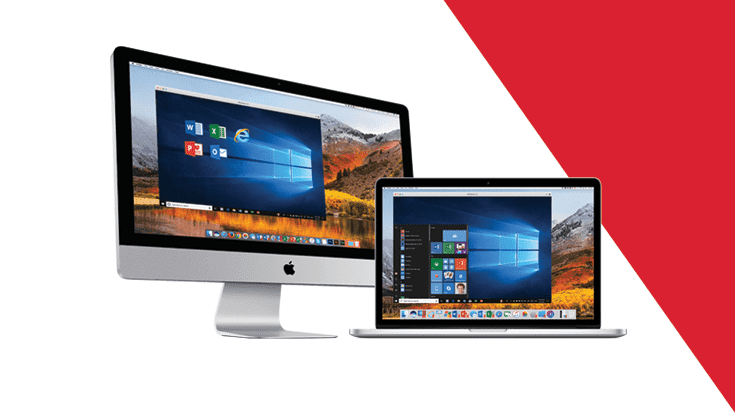
Parallels Desktop 13 for Mac received an update on Thursday to include full compatibility with the new Apple File System (APFS) and HEVC video standard included in macOS High Sierra. Parallels Toolbox for Mac and Windows 30+ tools in a lightweight, powerful, all-in-one application for Mac ® and PC. Easy to use and economical—a whole suite of tools for a fraction of the cost of individual apps, packaged in one simple interface. Use Windows side by side with macOS ® (no restarting required) on your MacBook ®, MacBook Pro ®, iMac ®, iMac Pro ®, Mac mini ®, or Mac Pro ®.Share files and folders, copy and paste images and text and drag and drop files between Mac and Windows applications.
Key to this is something Parallels calls Coherence mode. Coherence mode allows application windows to coexist side by side. Rather than, for example, running on a Windows 8.1 desktop, you can run on the Mac desktop and some windows can be for Mac applications and some for Windows applications.
As the video above demonstrates, this is what I needed. I use applications and resources from both Mac and Windows and I wanted to be able to move between them quickly and easily.
Unfortunately. Parallels gets a little fussy in Coherence mode. It's doing some serious magic to let those environments coexist as if they were one system when they're completely different environments. While Coherence generally works fine for users with one monitor, the boards are chock full of stories of people with a second monitor having problems -- and I have four monitors.
To make matters worse, I have one Thunderbolt monitor, I have one monitor connected via a USB-to-HDMI connection, and I have one monitor connected via DisplayPort-to-DVI that's then been rotated 90-degrees. This is about the most complex environment Coherence has to handle.
My first attempt
At first, it looked like I was going to lose out on one of my goals: to have Windows applications and Mac applications coexist side-by-side in their own windows without having to switch into and out of the Windows desktop. Unfortunately, I kept getting an 'Unable to switch to Coherence' message, stating that: 'The virtual machine configuration could not be applied.'
After a very pleasant but ultimately unproductive support call to Parallels, I was almost ready to call it quits. The Parallels support representative told me that when in Coherence mode, Windows has to handle some more of the hardware driver responsibilities, rather than relying on the Mac. And if there's no working driver, then Windows can't go into Coherence.
Solving the driver problem
This gave me an idea. The Coherence mode worked until I added the USB-to-HDMI connected DisplayLink device. So I went to the DisplayLink site and downloaded the Windows drivers. I installed them, and tried Coherence. No joy.
I stepped away, found a leftover sandwich in the fridge, and thought on this for a while. I didn't recall installing a driver for the DisplayLink on the Mac OS X side. Back to the system I went, found that there was, indeed, a DisplayLink driver that could be installed, installed it, and rebooted.
This completely confused the Mac, and all four monitors came up in 1024x768 mode and they all mirrored each other. But after I turned off mirroring in the Display Arrangement panel, and moved the monitor layout around to properly represent my layout, I once again tried Coherence.
This time, it worked!
Parallels
Then it all goes to crap
And then we had a power failure (our third in three days) and the whole thing crashed. I had already ordered a bigger UPS to handle all the power my new configuration was sucking from the wall, but it hadn't arrived yet. So when the power failed, the iMac shut down.

Parallels For Mac Free
After a reboot, Coherence didn't work.
Buy Parallels For Mac
I uninstalled the Mac DisplayLink driver and reinstalled it. I did the same on the PC side. No joy. No Coherence.
The boot up trick
Featured
This is where those weird tingling feelings sometimes come to the rescue. Somehow, I got it in my head that maybe Coherence mode didn't like the rotated display. I found that if I booted into Windows while the display driver did not have the display rotated at 90 degrees, Coherence would initiate. Even more interesting, once Windows booted, the display could then be set to 90 degrees and Coherence would remain, well, coherent.
This makes booting up a bit of a pain in the butt. I have to make sure the display is not rotated, boot Windows, go into Coherence, and then rotate the display.
Interestingly, the boot issue is only when booting into Windows, not when restoring from a saved virtual machine image. I did a test where I saved the VM, exited Parallels, and rebooted the iMac. I did not rotate the rightmost monitor back to level, but instead left it at its 90 degree rotation. I relaunched the saved virtual machine from Parallels and it worked properly, letting me launch right into Coherence mode.
In my past few months experience with this solution, I've confirmed I only have to do the rotation reset sequence if I reboot Windows, which is only when I need to install major Windows updates.
It works and has been reliable
This, of course, leads to one of those classic tech experiences where you're not entirely sure which of the many factors caused or fixed the problem. Was installing the DisplayLink drivers necessary? Was it that, in combination with the rotation glitch? I have no idea. The fact is, I think I've found a way to get it working, and that's good enough for me.
If you have issues with Coherence, make sure to check the Mac and Windows drivers, and make sure to set your monitors to most standard settings you can before booting. Once you've launched into Coherence successfully, then go ahead and tinker with the settings and see if it works and remains stable.
Do you use virtualization software on your Mac? I looked at Fusion and I've long used VirtualBox, but Parallels allowed me the best tight application integration across platforms. What has your experience been? Let us know in the TalkBacks below.
By the way, I'm doing more updates on Twitter and Facebook than ever before. Be sure to follow me on Twitter at @DavidGewirtz and on Facebook at Facebook.com/DavidGewirtz.
