Parallels Desktop for Mac emulates PC hardware, so operating systems that are not present in this list can work as well. They are not on the list because we didn't.
Editors' note, October 30, 2014: This review has been updated with new features added after the release of the Windows 10 technical preview.
Parallels Desktop for Mac has been letting people run Windows and other operating systems on their Macs for years. And with every major update, Parallels has added yet another feature that makes switching between your regular operating system and virtual machines even more seamless.
There are other apps that do virtualization, such as $60 VMWare fusion (also available for £36, or AU$64) or Virtual Box (free). These will both let you run Windows on your Mac (as long as you own a copy) and might be good enough for your purposes.
Download Parallels Desktop 10 For Mac
But what makes Parallels Desktop 10 for Mac special, is the way it incorporates Mac OS X Yosemite and iOS 8 features. Some of the new features give you more interactivity between operating systems, letting you place Windows apps on the Mac Launchpad or Dock, for example, and even as far as letting you use new features in Mac OS X Yosemite straight out of a Windows environment.
What is Parallels for?
Parallels Desktop ($80, £50, or AU$86) is a virtualization system for running other operating systems on your Mac. As an example, this would be useful if you use Windows at work, but have a Mac laptop at home because it means you can run all the Windows specific tools from work on the Mac without having to buy a separate computer.
Virtualization is used by software developers as well, because it allows them to run an operating system that has no ties to the computer it's on. This way, even if a virtual system gets a virus, it can only infect that enclosed system, leaving the host computer virus free. From there all they need to do is shut down and restart from an earlier healthy snapshot of the virtual system to start again fresh.
Parallels is also useful for people who play video games because it lets them pick from the much larger library of Windows titles and play them on a Mac. In this particular case, your mileage may vary because your Mac may not have the video processing power of high-end video cards.
If you're going to use Parallels with one of the free operating systems offered in the app (more on this later), you'll only need to spend the $80 for Parallels. But be warned, that in order to use this software with Windows as I did in this demo, you're going to be spending $80 for Parallels, plus the price of Windows 8.1 (currently available for about $120, £70, or AU$130). While it is not cheap, if you identify with one of the use cases above, it's worth the money.
Installing an operating system
To get Parallels up and running, you're going to need to have the full version of another operating system on hand. From the Parallels launcher, you can download free operating systems including Chrome OS, Ubuntu Linux, Android OS, or even another version of Mac OS X using your Mac's recovery partition.
Past versions of Parallels had the option to purchase and install Windows 7 from within the software, so you could get started right away. Microsoft no longer has a deal with Parallels, but Parallels Desktop 10 enables you to download and install a 90-day trial of Windows. The wizard also lets you move a PC, including Windows and all of its applications and files to your Mac so you have everything you need on one computer
If you know you'll need to run Windows for the long term, the easiest option is a box copy of Windows 8 on a DVD. As long as you have an internal or external DVD drive, you can select it from the Parallels Launch Center, and start installing straight away. In the latest version of Parallels, you also can drag and drop a .ISO file straight into the interface to start the installation.
If you downloaded Windows from Microsoft hoping (like I did) to just select the installer executable, you're going to have a tough time. Parallels requires either a DVD or image file (ISO), or you can use the Parallels Transporter Agent to migrate Windows from another PC.
To create an ISO file, you'll need to start the installation on another Windows PC, download all the data files, then select create as image, and choose either DVD or thumb drive. It took me some time to figure it all out, but I finally used a thumb drive to transfer the installer and get it running on my Mac. This is all just a precaution to make sure you don't make the same mistake I did and already have an ISO image or boxed version of Windows before you get started.
While I think it's OK that Parallels has specific requirements for the installation file, it would be nice if the app took care of the conversion for you. Without knowing, it's pretty easy to buy and download an operating system in the standard way (resulting in an .exe file) that requires a lengthy process for conversion before it will work.
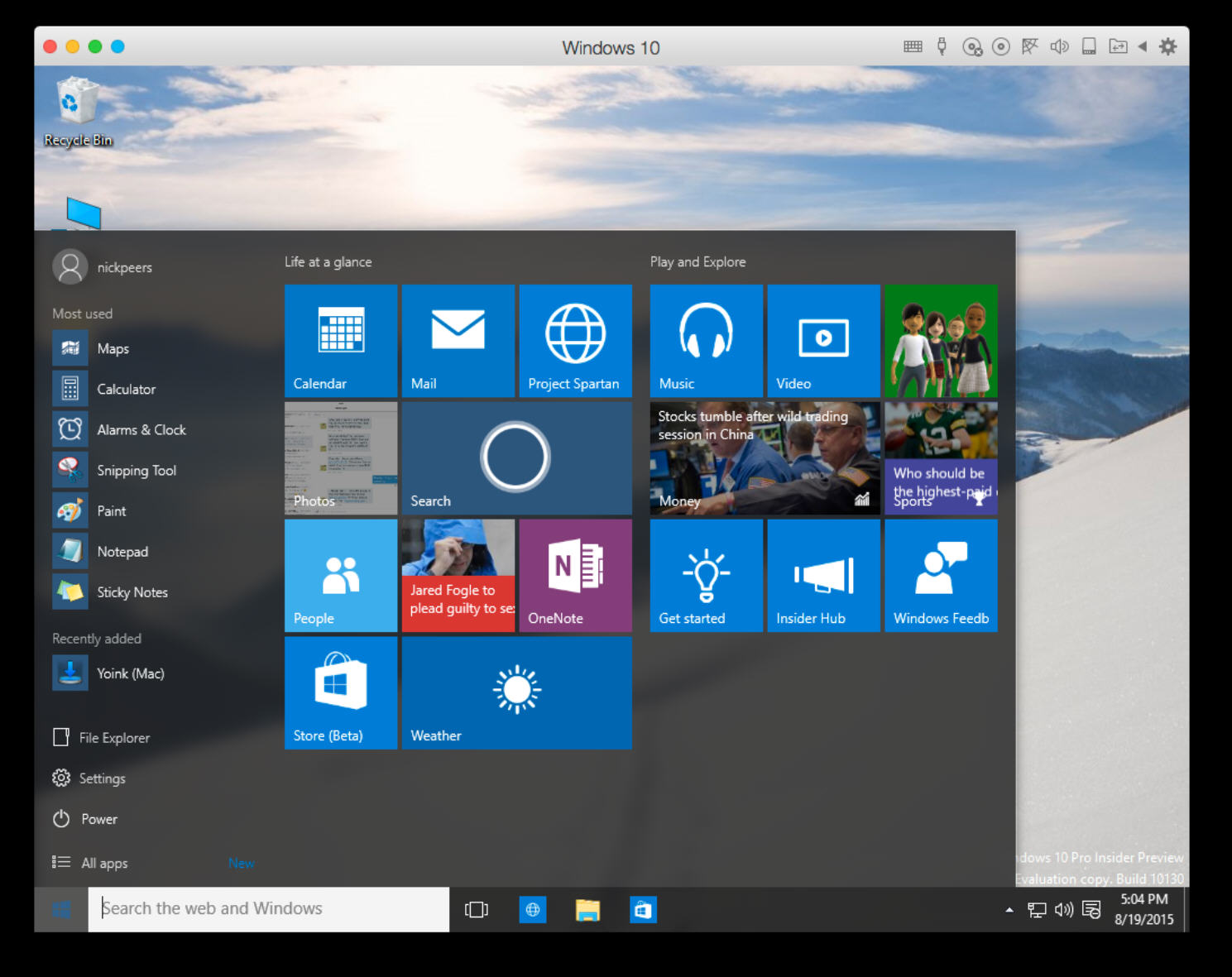
Parallels has a long history of smashing together competing operating systems to help platform-blending organizations move easily between OSes and get things done. The company will do it again with the newest Windows operating system (or service) Windows 10 and OS X Yosemite (yes, Yosemite), but this time with a twist.
Parallels Desktop 11 for Mac brings Cortana, Microsoft’s digital assistant to the OS X desktop. Obviously, the OS-virtualizing software is also bringing a bunch of other stuff in version 11 (is there any sadness that there will never be a Windows 11?).
See also: Apple OS X El Capitan preview: Better Spaces, transit maps and more
If you haven’t used Parallels software before, it performs the neat trick of putting a fully virtualized version of, now, Windows 10 on a Mac OS X Yosemite system (El Capitan support is in the “experimental” phase). This allows you to run a licensed version of the OS on a Mac and access all the apps that would normally run only in Windows. Bootcamp, by contrast, allows you to run Windows on a Mac, but in a completely separate environment.
It goes further, though, by blending Windows 10 elements into OS X in ways that make them seem almost like part of your Mac. For example, Cortana can pop up from the OS X dock when you say “Hey, Cortana.” You can use it in all the ways you normally use Cortana (news, weather, Web search) and to launch Mac apps. It also adds the new Windows Notification center to the Mac desktop — it sweeps in from the side of the screen, just like on Windows 10.

Parallels Desktop 11 also brings Mac features to the virtualized Windows system, like Quick Look, which you access via the space bar. And if your MacBook has a Force Touch-supporting touchpad, you can use that to quickly access word definitions in Microsoft Word for Windows.
Parallels Desktop 13 For Mac
You can also see all files on your Mac in Windows and, according to company representatives, transferring files between the OSes is easy. If you print a Windows file, you’ll have access to the full Mac print dialog box.
The company also promises that this will be the fastest Parallels ever with 50% faster boot and shut down times and a 20% speed bump for task management.
Parallels Desktop 11 for Mac, which is available Wednesday, will support new licensed Windows 10 installations and migrations from existing machines (which will basically ghost the whole system onto your Mac). Standalone Parallels Desktop 11 for the Mac costs $79.99. Upgrade pricing for those using versions 9 or 11 is $49.99. A Pro edition, which adds, for instance, integration with developer tools and cloud storage access, is $49.99 a year.